How to build a spaced revision timetable that survives a real week
Most revision plans fail because they assume a perfect week. Here is how to build a spaced schedule with slack built in, and how to space topics so each one comes back just before you would forget it.
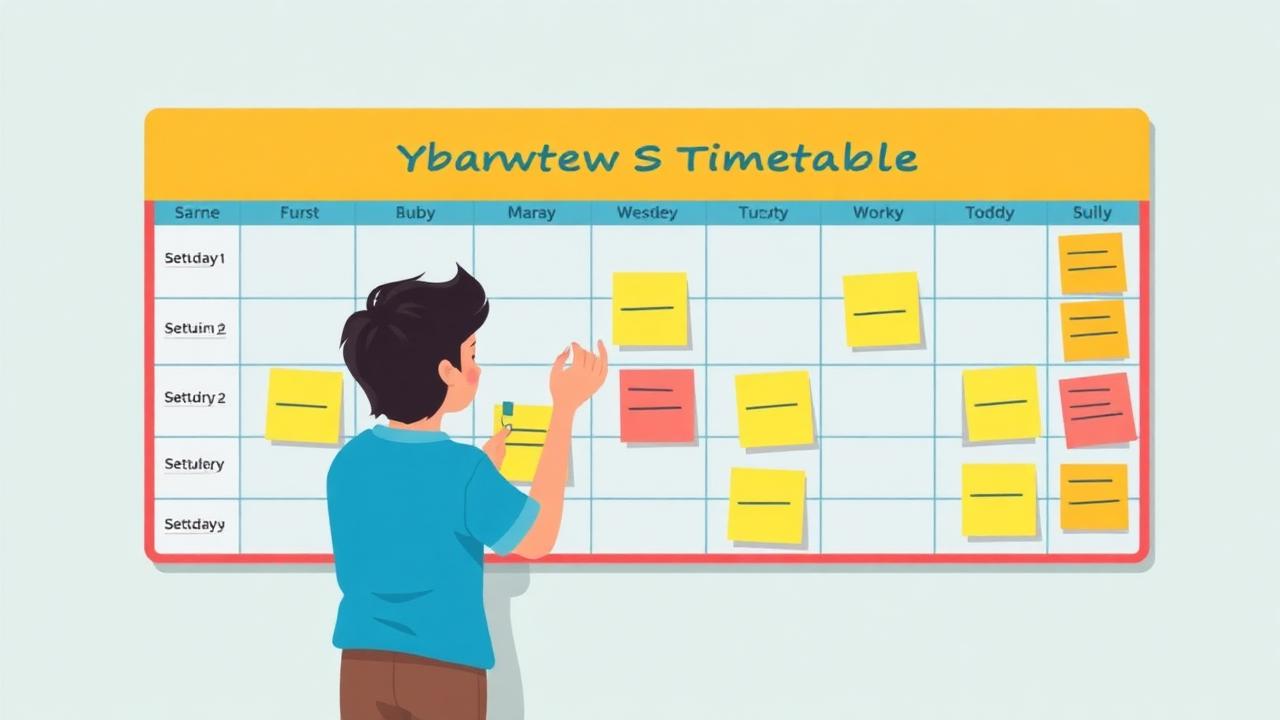
A revision timetable is not a moral commitment, it is a forecasting tool. The reason so many collapse in week two is that they are built for an idealised student with no illness, no shifts, no family events and no bad days. A schedule that assumes perfection breaks on first contact with a normal week, and once broken most people abandon it entirely rather than repair it.
The fix is to plan capacity, not hours. Look at last week honestly: how many focused hours did you actually complete? Plan 80% of that number, and keep the remaining 20% as recovery slots you can pull work into when something goes wrong.
Step 1 — list topics, not subjects
"Revise biology" is not a task; it cannot be finished, so it never feels done. Break each subject into topics small enough to be covered in one 25 to 40 minute block: enzymes, transport in plants, gas exchange. A topic list is also the unit spacing works on — you cannot space a subject, only a topic.
Step 2 — space each topic on a 1-3-7-14 rhythm
After you first learn a topic, revisit it the next day, then three days later, then a week later, then a fortnight later. Each successful recall stretches the next interval. The point is to meet the material again just before it fades, because the effort of pulling it back is what strengthens the memory. Reviewing something you still remember perfectly is comfortable and mostly wasted.
Step 3 — make every block a retrieval block
Write the block as a question, not a chapter: "close the notes and explain osmosis with a diagram", not "read osmosis". If you can answer in under two minutes with no gaps, the topic goes onto a longer interval. If you stall, it comes back tomorrow.
Step 4 — protect one weekly review
Reserve 30 minutes at the end of each week to move topics between intervals, drop what is secure and pull forward what you failed. Without this the plan silently drifts out of date, which is how you end up revising what you already know while your weak topics stay untouched.
Step 5 — repair, never restart
If you miss two days, do not rebuild the whole plan. Move the missed topics into the nearest recovery slots and continue. Restarting resets your spacing and usually costs another week of momentum.
In StudyPie this maps directly onto the product: each topic becomes a study pack, each review becomes a flashcard session or a short practice test, and the results tell you which topics need a shorter interval. If you would rather run it on paper, the rhythm is the same — the schedule only has to tell you what to recall today.
- Plan 80% of the hours you actually completed last week, and keep the rest as recovery slots.
- Schedule topics, not subjects, and space each one on a 1-3-7-14 day rhythm.
- Write every block as a question so it forces recall rather than rereading.
- Repair a broken plan in the next free slot instead of restarting it.
Written by the StudyPie team from the study methods we build into the product. Put it into practice with StudyPie's study packs, flashcards and practice tests.